
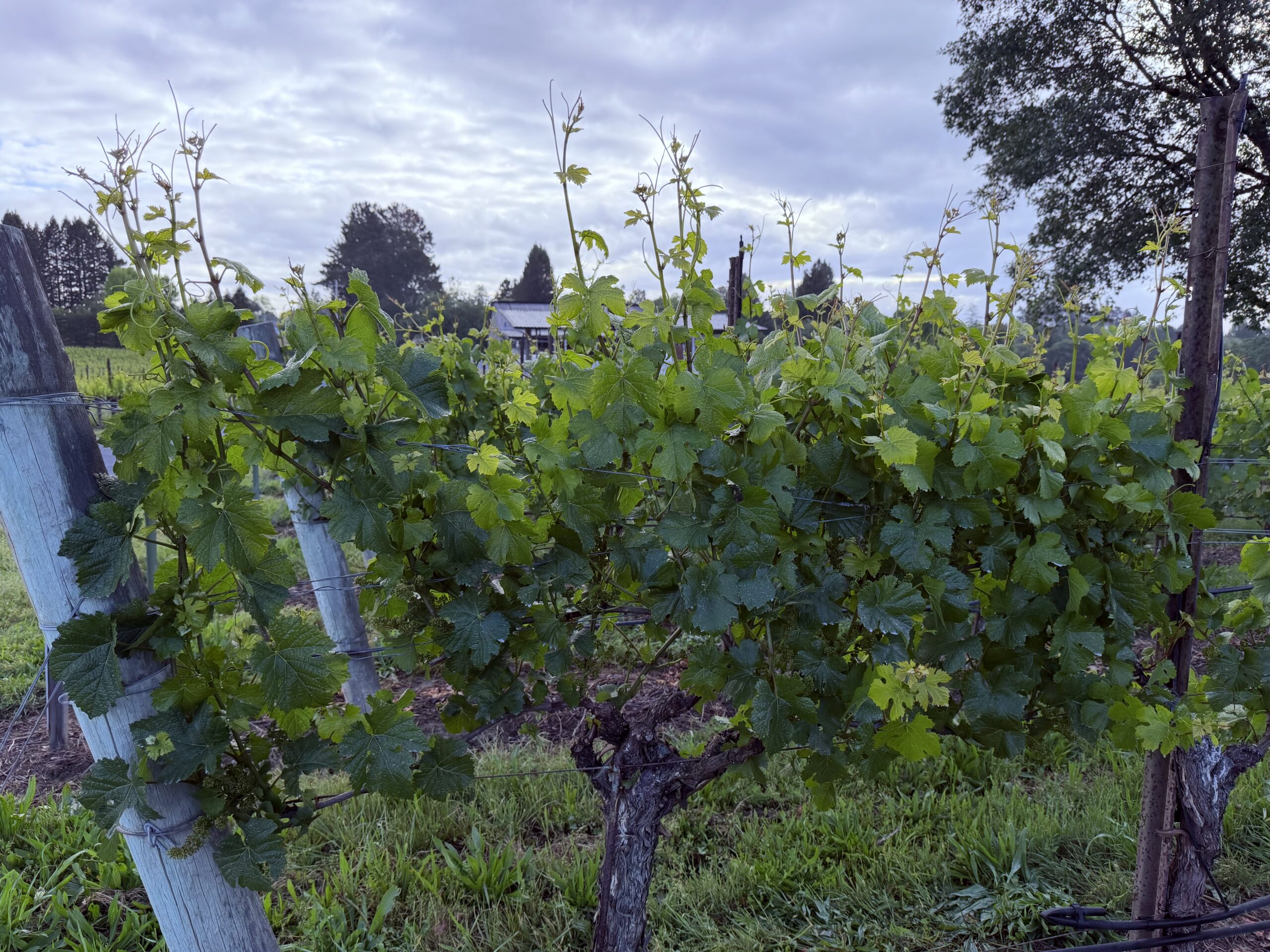
Vineyard Update
Again, this year April proved to be unpredictable with its weather patterns. It’s normal to have big swing from spring showers to early morning frost events and intense afternoon heat. This season on the other hand has been unique its own way. Mild nighttime temperatures and mild afternoon temperatures have gone against the big swings. We also had two significant rainstorms that added to our annual rain total by about 4-6 inches. This has pushed up the inland areas to be just slightly below average and the coastal or western parts of Sonoma County to be average or slightly above. This is good news and takes pressure off the needing to start irrigation early this season. The rain proved to be somewhat disruptive to vineyard operations as some things were delayed due to the heavy rain, but the warmer temperatures helped mitigate cold frosty nights and we only had to turn on the frost protection system one time this year! Down from 4 times each in 2025 and 2024.
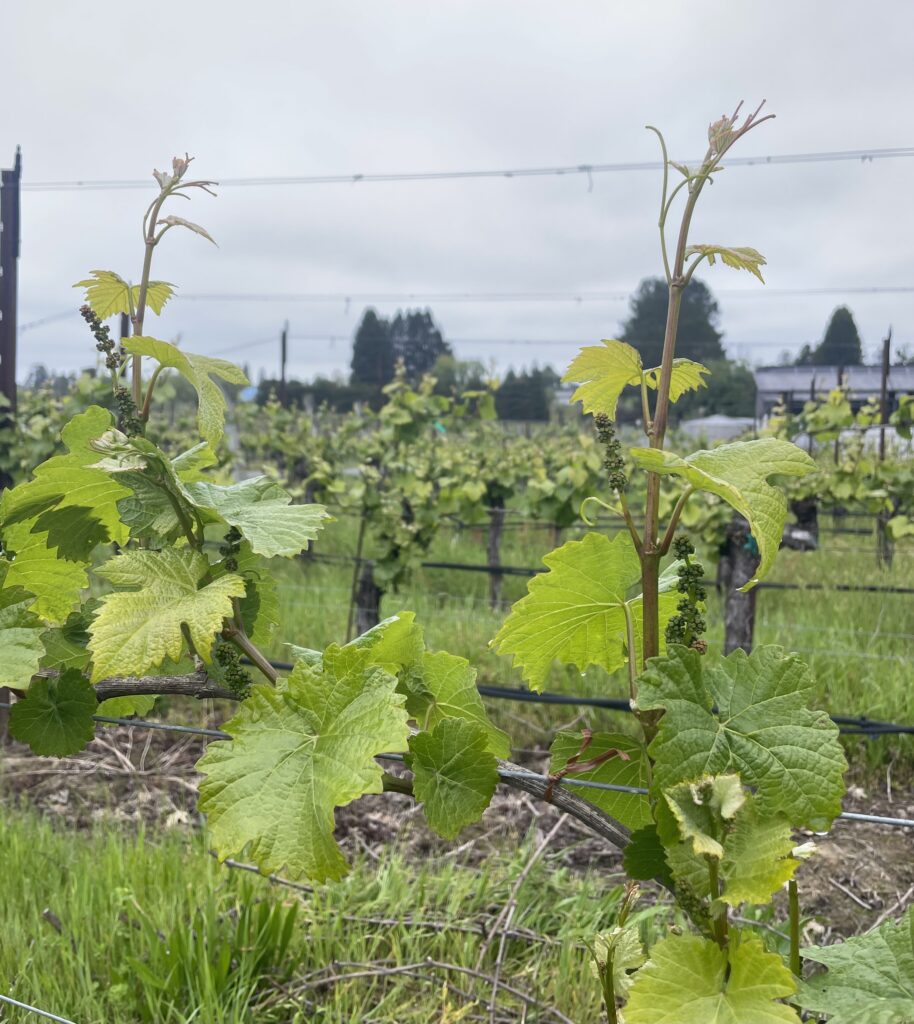 This is a picture of a young Pinot Noir vine on April 24th, 2025.
An early bud break this season has us tracking ahead of last year, signaling a strong and well-timed start in the vineyard. While rainfall has been variable across Sonoma County, winter and early spring storms have provided enough moisture to recharge soils in many sites. With profiles in good shape, vines are pushing with energy, and we’re already seeing uniform, accelerated shoot growth. It’s an encouraging setup as we move deeper into the growing season, with timing and vine development currently trending ahead of last year’s pace.
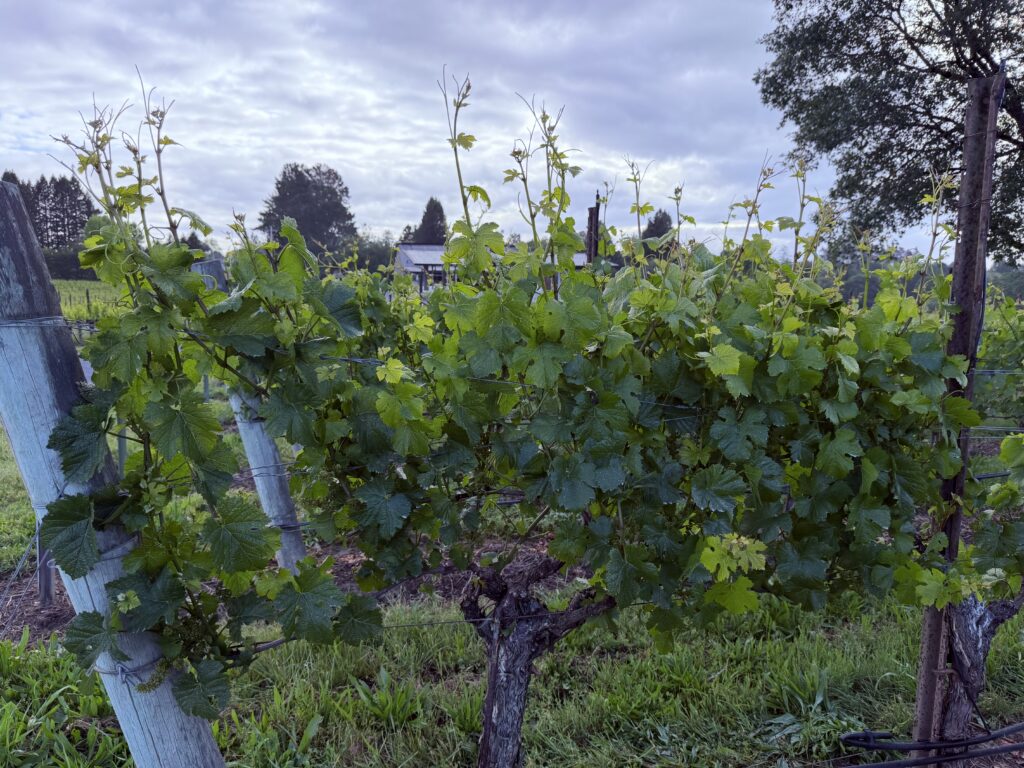 This is a picture of a young Pinot Noir vine on April 27th, 2026. The shoot lengths are much longer and canopy vigor higher compared to this time last year!
Ground Cover Management
As we move further into the growing season, our focus shifts beyond the vines and into the soil that supports them. With an early bud break and the season tracking ahead of last year, maintaining balance in a cool, fog-driven site like Green Valley becomes even more important. One of the key approaches we rely on is a no-till system paired with native grass cover.
Rather than working the soil, we leave it undisturbed and allow native grasses to establish between the rows. In our Goldridge sandy loam, that’s critical—it helps preserve structure, improve infiltration, and prevent the soil from drying out too quickly as we move into the warmer part of the season. After winter rains, these grasses stabilize the vineyard floor while still allowing the soils to drain and breathe, which is key in a region where moisture and fog can linger.
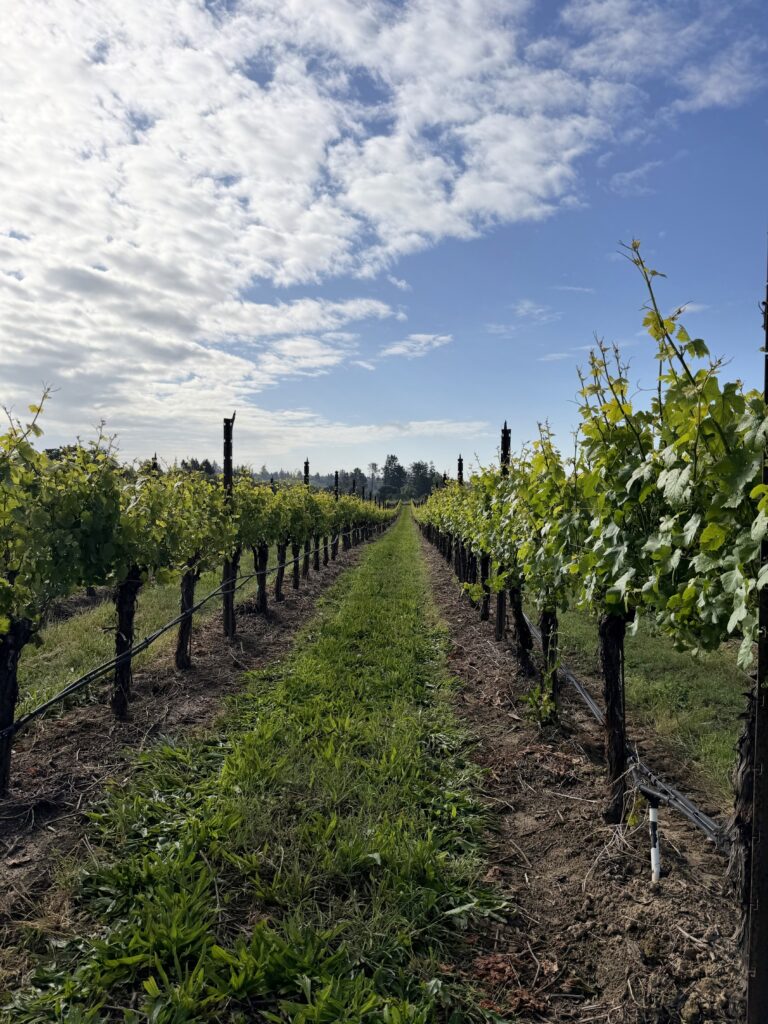 Healthy, native cover crop growing between Pinot Noir vines. Despite the rains we have been able to mow between rows.
Because we’re not tilling, the soil biology stays intact, supporting steady nutrient cycling and healthier root systems. The native grasses are well-adapted to our site, so they naturally strike a balance—providing just enough competition to keep vine vigor in check without over-stressing the vines, which is especially important for Pinot Noir here. They also add to the biodiversity of the vineyard, supporting beneficial insects and contributing to a more resilient system overall.
At the end of the day, this no-till, native cover approach fits the pace of Green Valley. It keeps the soils healthy, helps moderate vine growth in a long, cool season, and supports the kind of balance we’re looking for in Pinot Noir year after year.
On behalf of the entire team here at River Road Family Vineyards and Winery, we wish you all continued good health!
