


Spring Report
What a difference a year makes! Our weather so far in 2026 has been very different than the last couple of years. It’s been drier and warmer. So far, our rain total is 22’’ or 60% of our historical average. The rainy season started out on par with history norms but really dwindled out during our rainiest months of the year which is January and February. March has been dry and very warm. As a matter of fact, we had a heat wave in the middle of the month which broke many daytime high records around the state. For the first time since we’ve been keeping records, San Franciso hit 90F in the month of March. Historically we’ve experienced the vines awaking right around March 20th with the past two years being later. This year we saw the first buds break open on the 8th. So, we are basically about two weeks earlier than the past few years. This timing still puts us on a good path to be harvesting in the beginning of September.
 Here we have a young grape bud just about to open!
The dry conditions this season have allowed vineyard crews across Sonoma County to get into the vineyard much earlier than usual to begin pruning and ground cover management. With little to no rain and firm soil conditions, both workers and tractors have been able to move efficiently through the rows, completing key early-season tasks without delay. In our vineyard, we were able to prune well ahead of bud break, taking full advantage of the dry weather. Another benefit of these conditions is the reduced risk of fungal and bacterial infections, since pruning cuts are not exposed to moisture that can carry harmful spores.
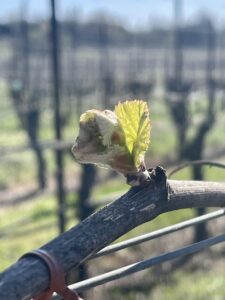 A fully emerged grape bud, in another few days you’ll be able to see the grape clusters!
The dry soil has also made it much easier to mow and manage weeds under the vines without the risk of tractors getting stuck or compacting wet ground. Keeping the area beneath the vines clear is important for improving airflow, which supports overall vine health and helps reduce disease pressure as the season progresses. With less vegetation competing for water, vines can also make more efficient use of the limited soil moisture available in a dry year.
 This is how much the shoots have grown in just these past three weeks!
Now that bud break has begun, the focus shifts to frost protection. Even in a dry year, the risk of frost remains, especially through April and into May. With less moisture in the soil and air, temperatures can sometimes drop more quickly overnight, increasing the potential for frost events. This makes it a stressful time for growers, as a single frost can significantly impact the crop. In our estate vineyard, we rely on overhead sprinklers for protection. By applying water when temperatures approach 35°F, a thin layer of ice forms around the buds, holding them at 32°F and preventing damage from colder temperatures below freezing.
On behalf of the entire team here at River Road Family Vineyards and Winery, we wish you all continued good health!
Be Well,
