

Season Update
Per usual our rainy season has been an interesting one for Sonoma County vineyards. Several promising Pacific storm systems have approached the coast, though a number have ultimately tracked just north or south of us. Even so, rainfall to date has been solid. Since the start of the water year on October 1, Sonoma County has received around 18 inches of rain, putting us slightly above average for this point in the season.
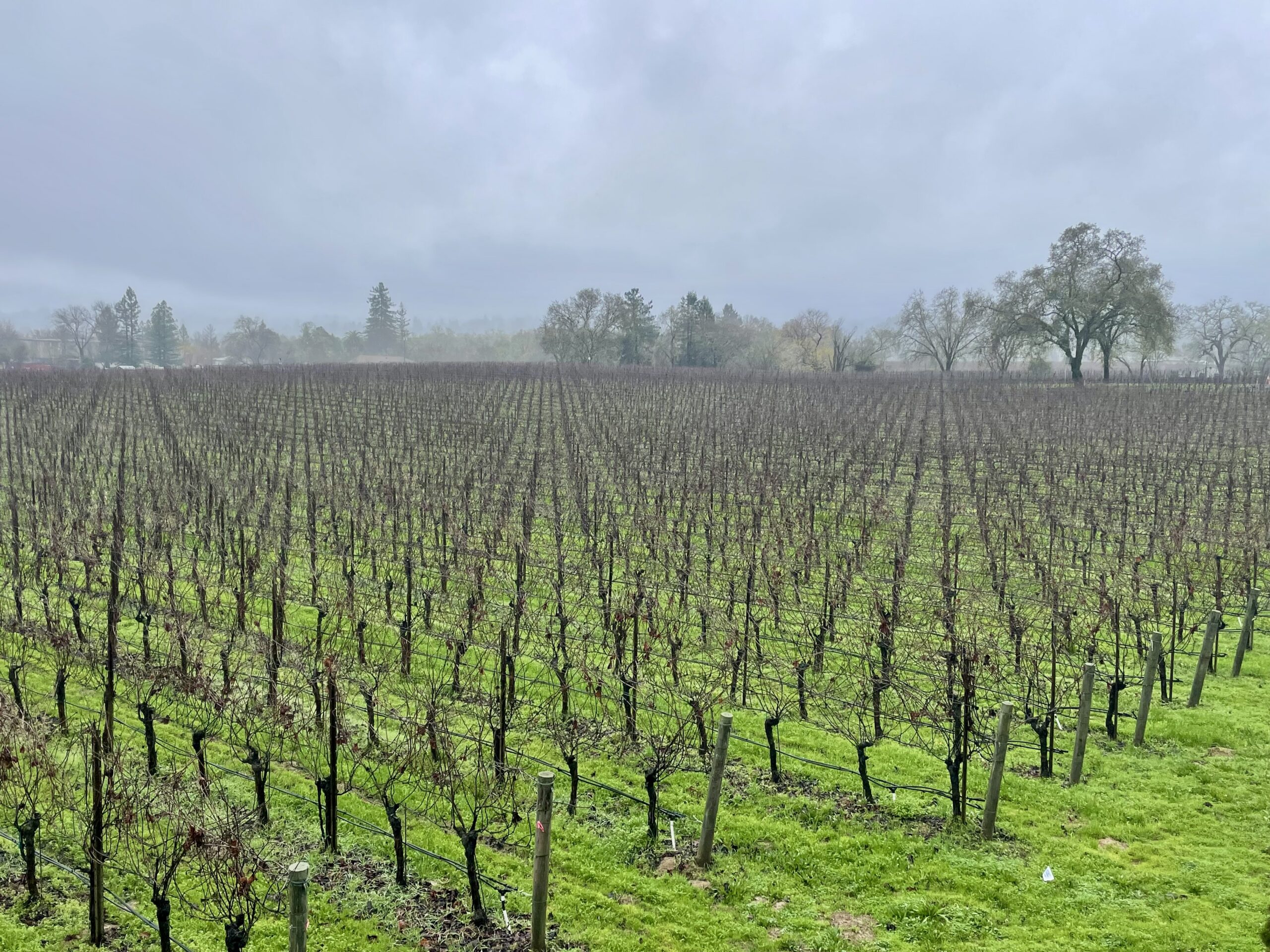
 A rainy day in January makes for a stunning site over the Estate Vineyard.
But we still have a long way to go to reach our typical seasonal average of 35–40 inches, additional storms will be needed through late winter and early spring, but we are starting from a healthy position. Reservoir levels remain strong following last year’s wet season, and water supplies across the region are in good shape as we move through the heart of winter.
Statewide, drought pressures have eased significantly compared to recent years, which has helped stabilize groundwater and surface water resources important to agriculture. Temperatures this winter have trended warmer than normal, limiting snowpack development in the Sierra. Snowpack is currently running below average, and colder storms later in the season would be beneficial for long-term water availability. On average, about 30% of California’s water supply comes from winter snow accumulation, making late-season cold storms an important factor heading into the growing season.
Vineyard Update
Pruning will take place this month and will be executed in a single, carefully timed dormant pass using a cane-pruning system. Cane pruning is particularly well suited to Pinot Noir, as it promotes more uniform bud fruitfulness along the retained canes and helps moderate vigor in sites with high soil fertility and ample winter moisture. Pruning decisions are made on a vine-by-vine basis, with careful selection of renewal spurs and fruiting canes based on cane diameter, internode length, and wood maturity from the previous growing season.
 A large Pinot Noir vine in dormancy, this vine had three fruiting canes.
It takes a well-trained eye and someone with a lot of experience to professionally prune a commercial vineyard. By retaining appropriately positioned canes with balanced node counts, we are actively managing crop load, encouraging uniform shoot emergence, and establishing an open, vertically oriented canopy. This structure improves light distribution and air flow within the fruiting zone, which is critical for disease management and for achieving optimal phenolic development in Pinot Noir.
It’s beneficial to prune when conditions in the Russian River Valley tend to be warmer and drier, which is why we wait until February. Pruning during this period reduces the susceptibility of fresh pruning wounds to trunk disease pathogens. The disease spores are more active during cool, wet winter weather. This timing supports long-term vine health and is especially important in cane-pruned systems, where larger pruning wounds can increase disease risk if poorly timed.
 A small Pinot Noir vine in dormancy, this vine only had two fruiting canes because of it’s smaller size.
Later pruning also provides a modest delay in bud break, which can be advantageous in frost-prone sites common to the valley floor and lower benches. Delaying bud break reduces the likelihood of early shoot exposure to spring frost events. Protecting early Pinot Noir growth is critical, as frost damage at this stage can have lasting impacts on yield, ripening consistency, and fruit quality.
Winter pruning plays a vital role in establishing balanced Pinot Noir vines, minimizing disease pressure, and laying the structural and physiological foundation for a successful crop in the upcoming growing season.
On behalf of the entire team here at River Road Family Vineyards and Winery, we wish you all continued good health!
Be Well,
