

Fall is Finally here!
During harvest, us winemakers are very focused: weather forecasts, vineyard walks, grape samples and whatever needs attention in the cellar. Once the last grapes are in, I finally have a chance to look around again. Usually, the Russian River Valley has been busy putting on its fall colors! The nights and mornings are getting colder. The first rains of the year tend to make an appearance. Fall is my favorite time of year here in Sonoma County, it’s a time of breathtaking beauty and a time to spend with family and friends enjoying great local food and world class Sonoma County wines!
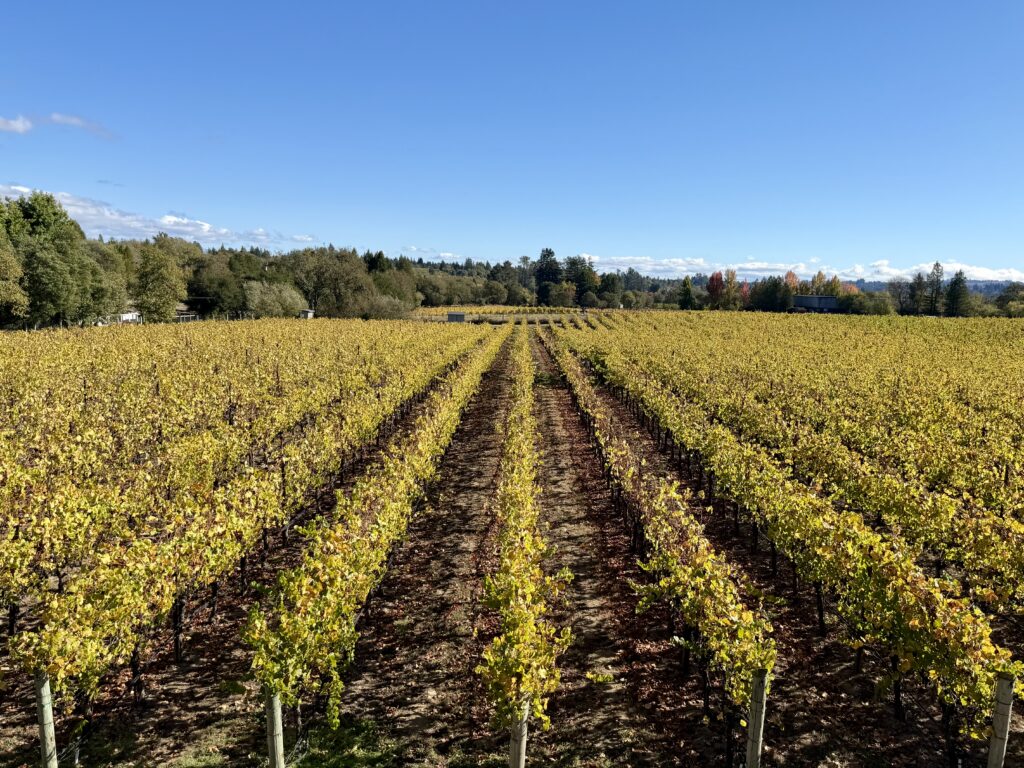 One of my favorite views! Looking down on the Estate Pinot Noir vineyard from the Winery deck. The vines got the memo that fall is here and are starting to drop leaves accordingly
This year certainly gave us plenty to think about. The 2026 season moved quickly, with early spring warmth setting the pace for an unusually early harvest. Cooler weather during flowering contributed to a smaller crop across much of Sonoma County, while a generally mild summer gave the grapes favorable conditions to develop flavor. Every growing season has its own personality, and this one will be remembered for its early timing, lighter yields and encouraging quality.
Before we start thinking about next year’s grapes, we need to take care of the vines and soil that produced this year’s harvest. What we do in these quieter months matters long after the leaves have fallen.
 This picture is a from pinot noir vine from earlier this season. The red coloring on the edges of the leaf indicates a nutrient deficiency. Testing the vines is important so is visually monitoring the vines throughout the growing season.
Vine tissue testing helps us decide where nutrients are needed and guides targeted applications through the drip system while the vines are still active. The goal is to support healthy growth and replenish reserves for spring, keeping the vines in balance. Soil amendments such as compost contribute organic matter that feeds the soil’s community of bacteria, fungi and other organisms. As they break down that material, nutrients gradually become available to plants. Over time, organic matter also helps soil particles bind into small, stable crumbs, creating spaces for air, water and roots. For our Goldridge sandy loam soils, improving the ability to hold moisture and nutrients is especially valuable. These changes build gradually, making compost part of our investment in the vineyard’s long-term health.
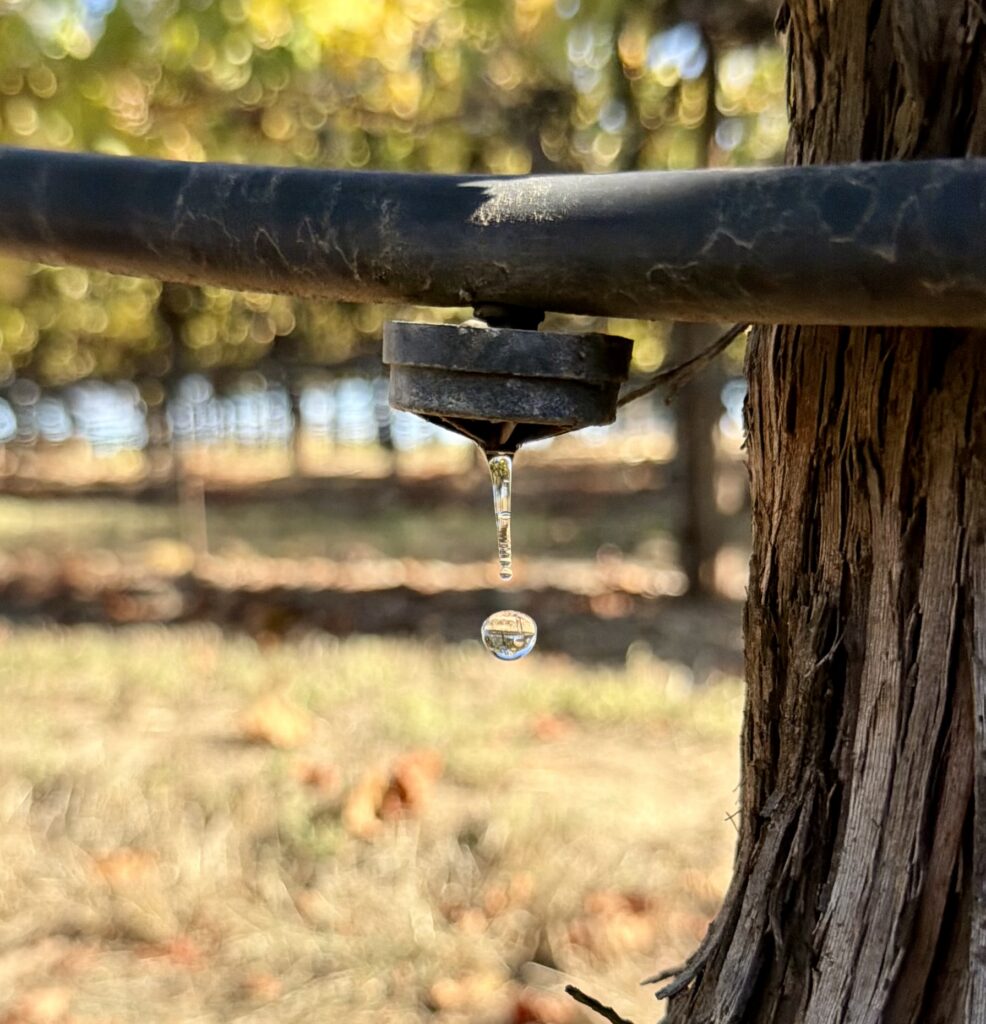 One of the most effective ways to get the needed nutrients into the soil is through the irrigation drip lines. The organic nutrients are fed into the irrigation system and applied right to the base of each vine.
Between the rows, cover crops help protect that investment through winter. Their foliage softens the impact of raindrops, while their roots hold soil in place and help rainfall soak in. Different plants offer different benefits: grasses such as oats and barley develop fibrous roots and capture available nutrients, while legumes such as clover, peas and vetch work with bacteria living on their roots to capture nitrogen from the air. As those plants decompose, some of that nitrogen can become available to the vines.
Timing matters, too. Managing cover-crop growth in spring helps limit competition with the vines as the soil begins to dry. The roots and plant material left behind contribute organic matter, continuing the cycle beneath our feet. Soon enough, we’ll be pruning and planning for another harvest. For now, I’m looking forward to a few unhurried meals, good company and the chance to enjoy the wines we’ve spent so much time making.
On behalf of the entire team here at River Road Family Vineyards and Winery, we wish you all continued good health!
